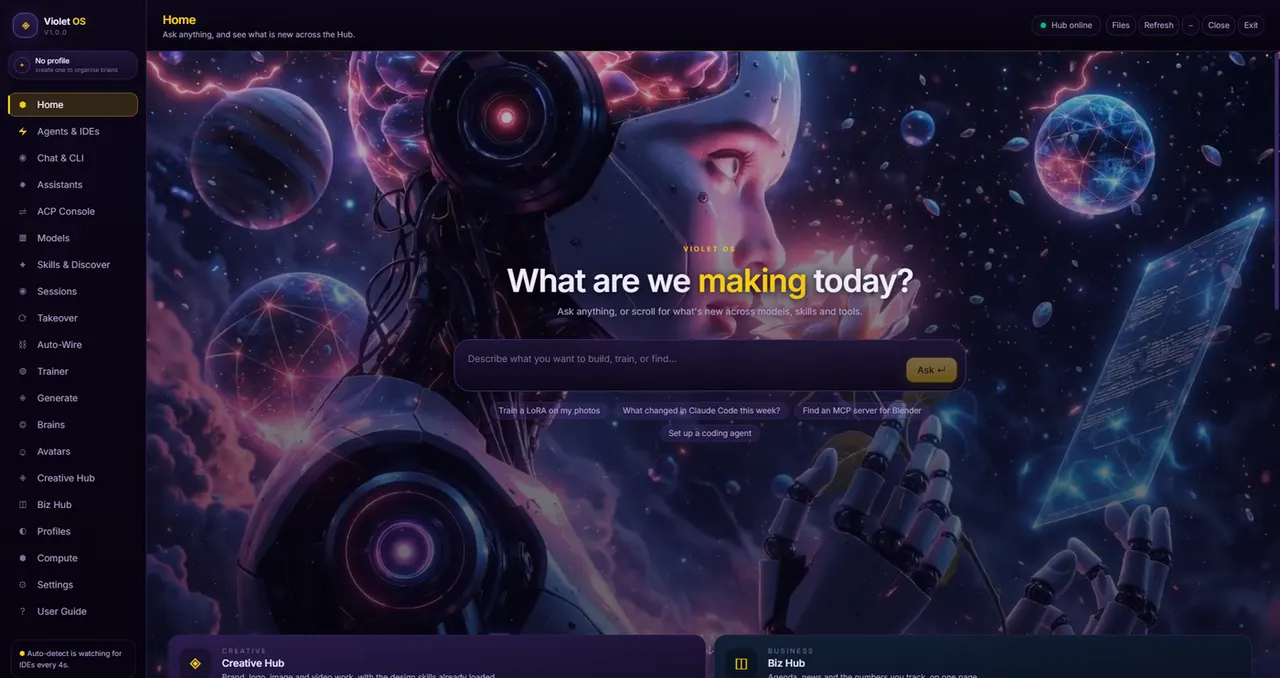
What it is
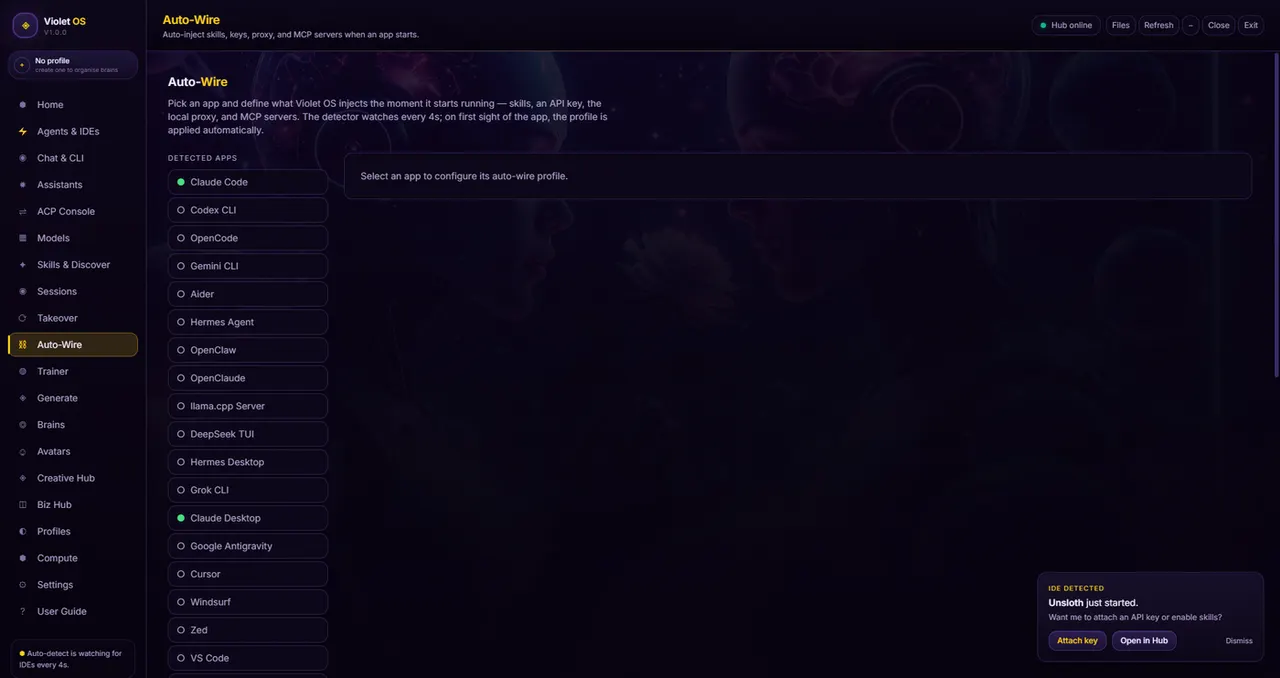
VIOLINET OS has two halves. Helm governs the machine — telemetry, processes, LAN devices, drivers, Safe Mode, security posture — and its trust model governs the whole application. The hub governs the agents: it notices a coding CLI or desktop app starting and patches its configuration in place, attaching skills, keys from the encrypted vault and MCP servers, so the tool arrives already wired.
311 source files and roughly 72,300 lines. 104 bundled skills. 38 applications known to the auto-wire registry. 271 model providers reachable through the gateway. No HTTP server and no WebSocket — the interface reaches privileged code through a single contextIsolated boundary and nothing else, and everything destructive is a two-step plan/apply gate.
Application · one-time
VIOLINET OS
The full desktop application, licensed per machine. Downloaded and run locally; no account needed to use what you bought.
- Agent roster and chat with tool loops
- Auto-wire for 38 detected applications
- Encrypted vault, DPAPI-backed
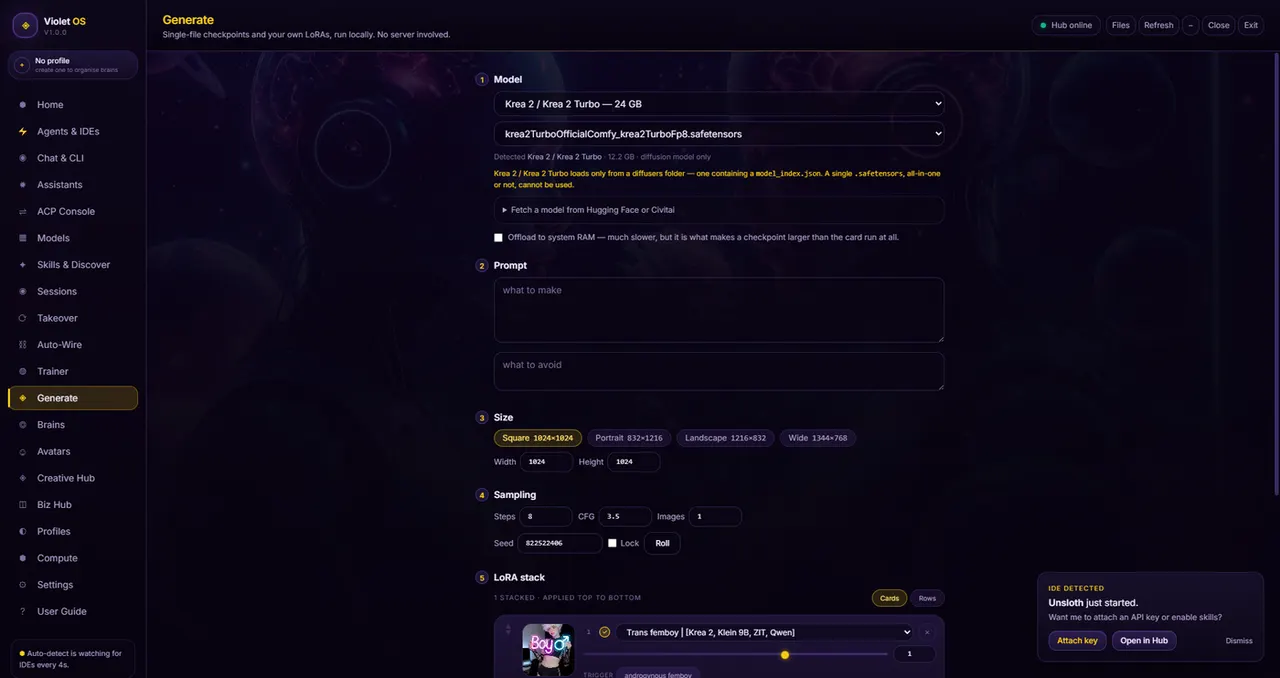
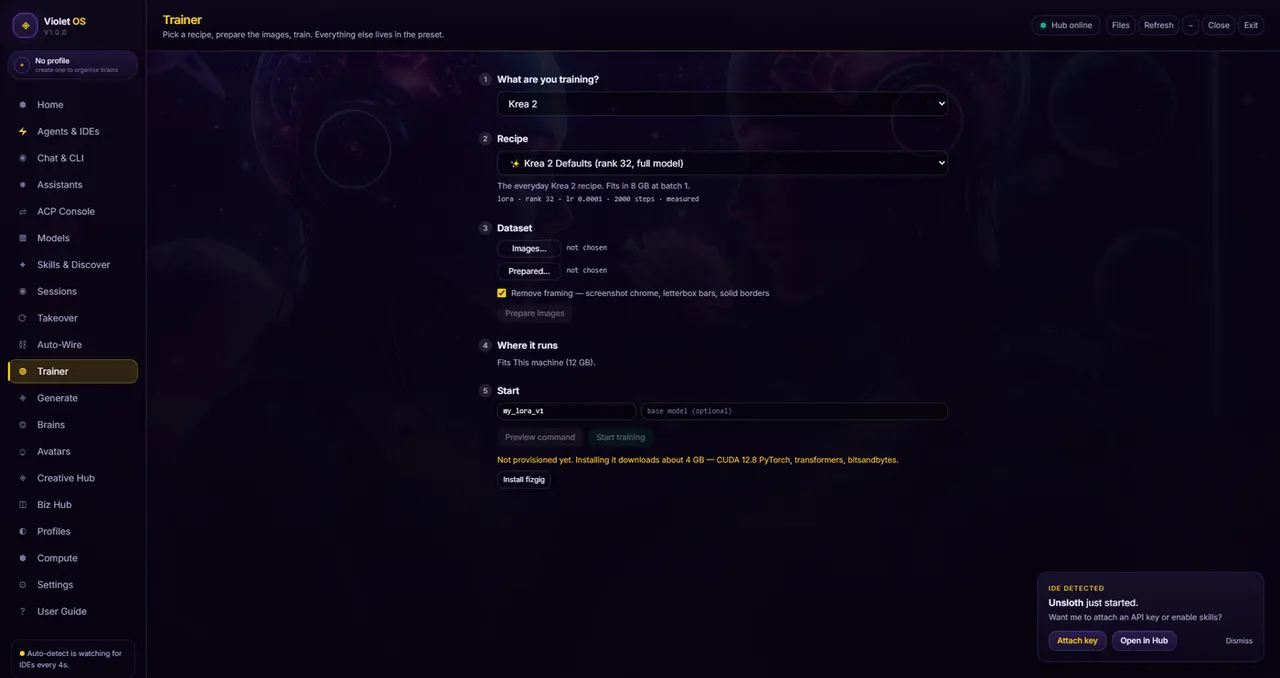
- LoRA trainer and local image generation
- Perpetual licence with upgrade pricing
Subscription
Skills & Model Library
The parts that keep changing. The application works without it; this is for staying current as new architectures land.
- Model catalogue updates
- New skills beyond the 104 bundled
- Trained LoRAs from Violet Diffusion
- Priority support for new model releases
Credits
Compute Credits
For work that costs real GPU time. If everything you do runs on your own card, you never need these.
- Hosted image generation
- Rented-GPU training runs
- Prepaid and non-expiring
- Billed against what actually ran
Why there are no prices here. VIOLINET OS has not launched. Its elevated execution path has never run successfully and stays gated until it does, so nothing privileged is wired up yet. Pricing gets set when there is a build worth charging for — announcing a number now would only mean changing it later. The screenshots above are the real application, not mockups.